

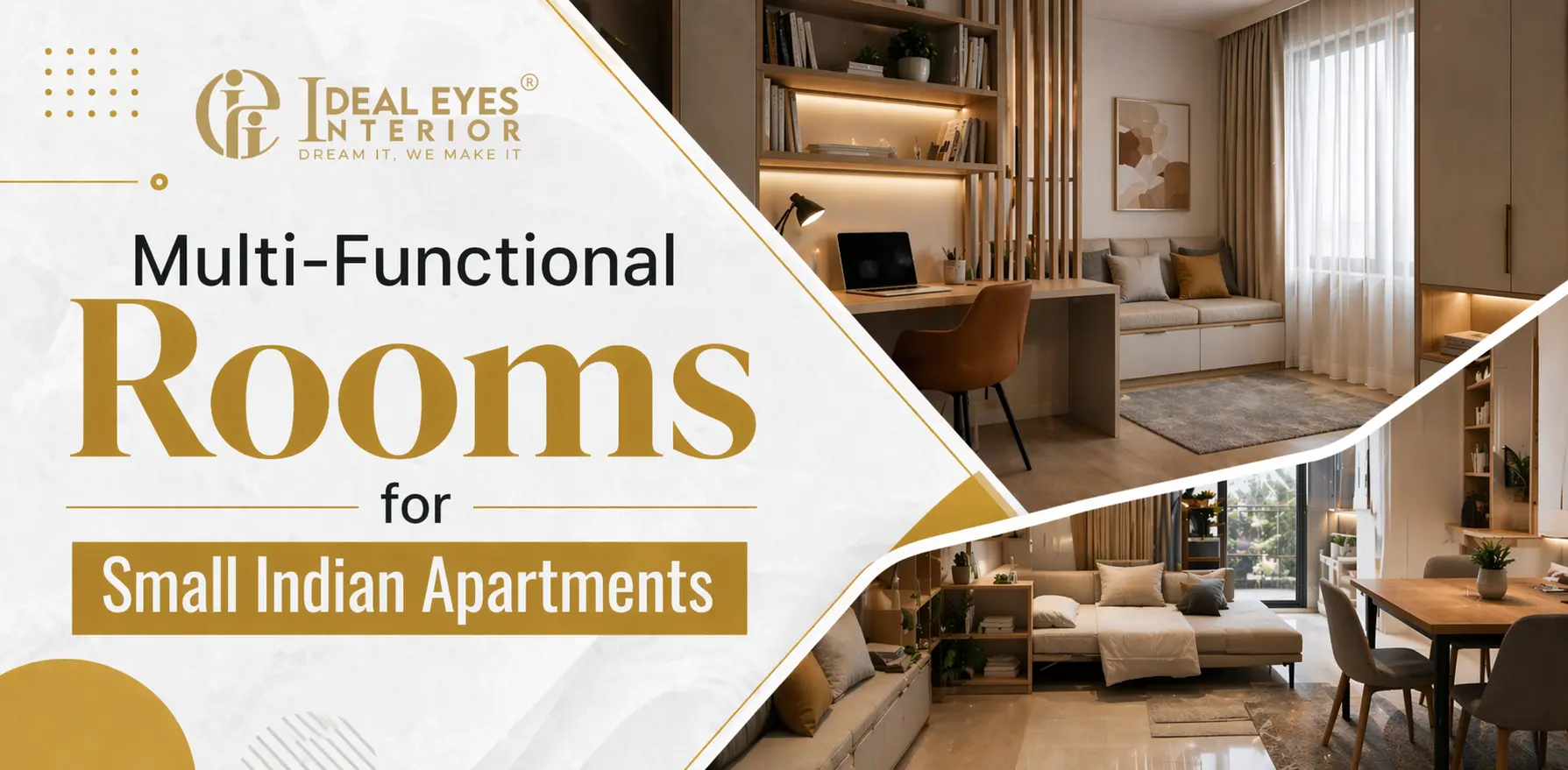
Urban living in India is evolving fast. With rising property prices and shrinking apartment sizes, homeowners are looking for smarter ways to use every square foot. A single room is no longer limited to one purpose—it needs to adapt throughout the day.
At Ideal Eyes Interior, we’ve seen a clear shift toward flexible, space-efficient interiors that blend comfort, aesthetics, and practicality. Multi-functional rooms are no longer a luxury—they are a necessity for modern Indian homes.
1. Start with Purpose-Based Zoning
Before choosing furniture or décor, define how the room will be used.
Ask yourself:
- Will this room function as a bedroom + workspace?
- Do you need a living area that doubles as a guest room?
- Is storage a major concern?
Once you identify 2–3 key functions, divide the space into zones. You can use rugs, lighting, or even subtle wall colors to visually separate areas without building walls.
Example: A corner desk with focused lighting instantly creates a “work zone” inside a bedroom.
2. Invest in Smart, Space-Saving Furniture
The backbone of any multi-functional room is furniture that adapts.
Look for:
- Sofa-cum-beds
- Foldable dining tables
- Wall-mounted desks
- Storage beds with hydraulic lifts
These pieces allow you to switch functions effortlessly without cluttering the space.
Pro Tip: Avoid bulky furniture. Choose sleek, modular designs that are easy to move and reconfigure.
3. Use Vertical Space Wisely
In small Indian apartments, floor space is limited—but walls are often underutilized.
Maximize vertical storage by adding:
- Wall-mounted shelves
- Tall cabinets
- Floating units
This keeps the floor area open and makes the room feel bigger and more breathable.
A vertical bookshelf can also act as a subtle partition between two zones.
4. Choose Neutral Colors with Layered Textures
Color plays a huge role in making a small room feel open and versatile.
Best approach:
- Use neutral tones (beige, white, soft grey) as the base
- Add warmth with textures (wood, fabric, soft lighting)
- Introduce accents through cushions, rugs, or art
This creates a calm, flexible environment that works for both relaxation and productivity.
5. Hidden Storage is Your Best Friend
Clutter is the biggest enemy of multi-functional spaces.
Incorporate hidden storage like:
- Beds with drawers
- Ottomans with storage
- Built-in wardrobes
This ensures everything has a place without making the room feel crowded.
At Ideal Eyes Interior, we always prioritize “design that hides clutter, not showcases it.”
6. Lighting Should Adapt to Function
Lighting can completely change how a space feels.
Use layered lighting:
- Ambient lighting for general use
- Task lighting for work/study
- Warm lighting for relaxation
Example: A bright white light for work hours and warm yellow light for evenings instantly transforms the mood.
7. Keep It Flexible and Minimal
The goal is not to fill the room—it’s to make it adaptable.
Follow these rules:
- Avoid over-decoration
- Keep pathways clear
- Choose movable elements
A multi-functional room should feel open, not overloaded.
Common Mistakes to Avoid
- Overcrowding with too much furniture
- Ignoring storage needs
- Using dark colors in small spaces
- Designing for only one function
Avoiding these mistakes ensures your space remains practical and future-ready.
Final Thoughts
Designing multi-functional rooms for small Indian apartments is all about balance—between style and functionality, comfort and efficiency.
With the right planning, smart furniture, and thoughtful design, even a compact space can feel spacious, organized, and luxurious.
If you’re planning to transform your home, Ideal Eyes Interior focuses on creating interiors that are not just beautiful—but truly livable.
FAQs
1. What is a multi-functional room?
A multi-functional room is a space designed to serve more than one purpose, such as a bedroom that also works as a home office or a living room that converts into a guest room.
2. How do I make my small apartment look bigger?
Use light colors, mirrors, vertical storage, and minimal furniture. Keeping the space clutter-free also creates a more open feel.
3. Which furniture is best for small Indian homes?
Space-saving and modular furniture like sofa-cum-beds, foldable tables, and storage beds work best for compact spaces.
4. Is multi-functional interior design expensive?
Not necessarily. With smart planning and the right furniture choices, you can create a multi-functional space within a reasonable budget.
5. Can one room be used as both office and bedroom?
Yes, by using zoning techniques, foldable furniture, and proper lighting, a single room can easily serve both purposes efficiently.