

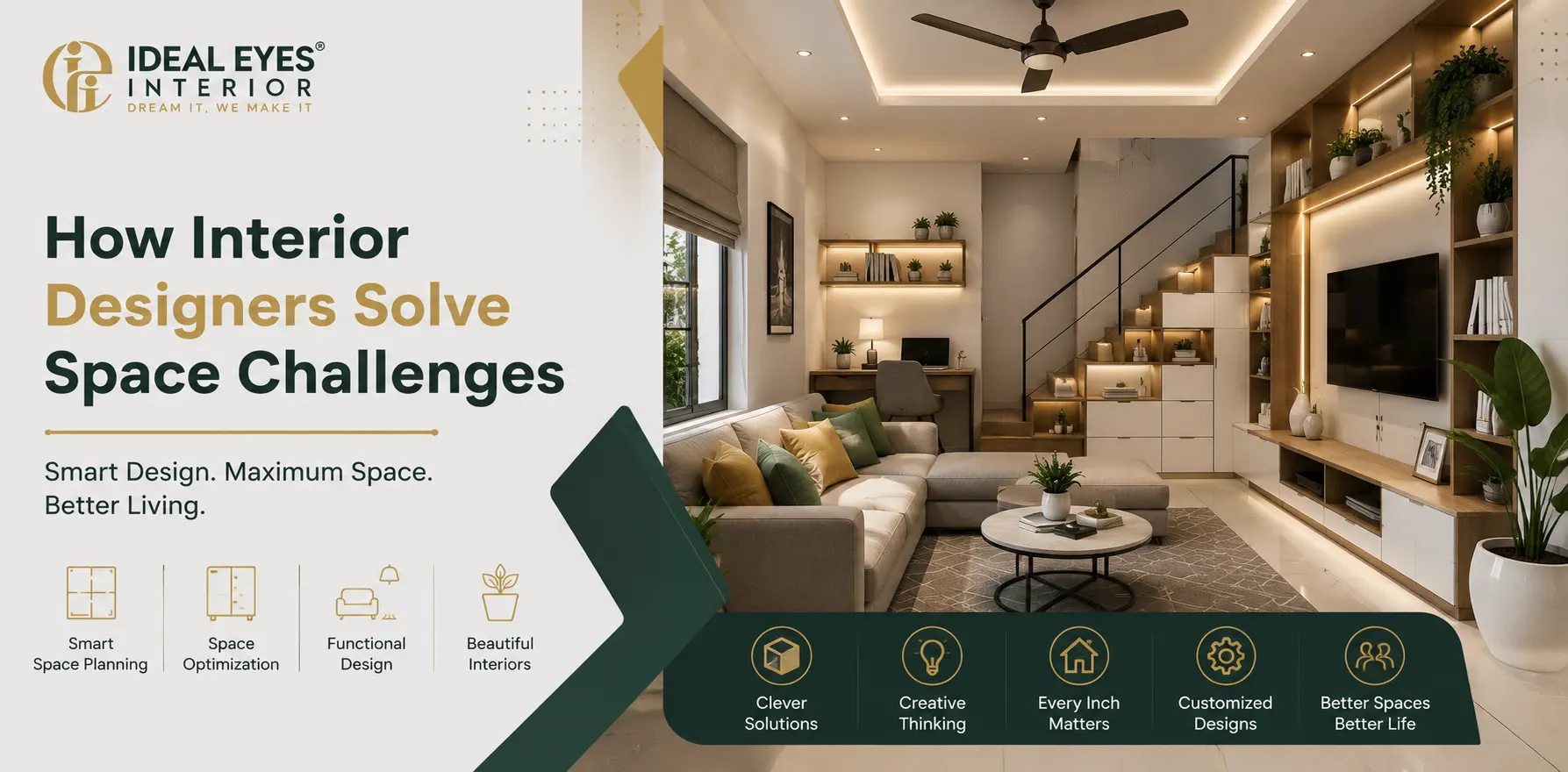
Making the most of available space has become one of the biggest priorities for homeowners, especially in urban environments where apartments and residential homes often have limited square footage. A well-designed home is not defined by its size but by how efficiently every area is planned and utilized.
Professional interior designers specialize in solving space challenges through thoughtful planning, creative layouts, and functional design strategies. Their goal is to create homes that feel spacious, organized, and comfortable while reflecting the homeowner’s lifestyle.
In this guide, Ideal Eyes Interior explains how experienced interior designers transform challenging spaces into practical and visually appealing living environments.
Why Space Planning Is the Foundation of Great Interior Design
Every successful interior project begins with space planning.
Rather than focusing only on furniture or decoration, professional designers first study how people move through a home, how each room is used, and how different areas connect with one another.
Effective space planning helps to:
- Improve daily functionality
- Reduce visual clutter
- Increase storage efficiency
- Create better movement throughout the home
- Make interiors feel larger than they actually are
Good design is not about filling a room—it is about creating balance between comfort, aesthetics, and usability.
Understanding the Homeowner’s Lifestyle
No two families use their homes in the same way.
Before developing a layout, interior designers evaluate how homeowners live, work, entertain guests, and organize their daily routines.
Questions often include:
- How many people live in the home?
- Is remote work part of the lifestyle?
- Are there children or elderly family members?
- How much storage is required?
- Which spaces receive the most daily use?
These insights allow designers to create personalized layouts instead of relying on standard floor plans.
Creating Functional Layouts
One of the most effective ways interior designers solve space challenges is through strategic furniture placement.
Rather than adding more furniture, designers focus on selecting appropriately sized pieces and arranging them to improve circulation.
Examples include:
- Defining separate living and dining zones
- Keeping walkways clear
- Reducing unnecessary furniture
- Positioning seating to maximize openness
A carefully planned layout often makes a room feel significantly larger without increasing its actual size.
Maximizing Vertical Space
Floor space is limited, but wall space often remains underutilized.
Professional interior designers make full use of vertical areas by incorporating:
- Floor-to-ceiling storage units
- Floating shelves
- Built-in wardrobes
- Wall-mounted cabinets
- Decorative storage systems
Vertical design solutions increase storage capacity while maintaining clean and organized interiors.
Designing Multi-Functional Spaces
Modern homes frequently require one room to serve multiple purposes.
Interior designers achieve this by integrating flexible furniture and adaptable layouts.
Examples include:
- Guest rooms with home office functionality
- Dining areas that double as workspaces
- Storage benches
- Foldable tables
- Modular furniture systems
Multi-functional design helps homeowners maximize every square foot without sacrificing comfort.
Improving Natural Light and Visual Openness
Natural light has a significant impact on how spacious a room feels.
Professional designers improve brightness by using:
- Light-colored wall finishes
- Reflective materials
- Glass partitions
- Strategic mirror placement
- Minimal window obstructions
Even compact urban apartments can feel open and inviting when daylight is carefully incorporated into the design.
Smart Storage Solutions That Reduce Clutter
One of the biggest contributors to space problems is poor storage planning.
Interior designers integrate storage directly into the design instead of treating it as an afterthought.
Popular solutions include:
- Under-bed storage
- Hidden compartments
- Built-in entertainment units
- Window seating with storage
- Customized wardrobes
Well-designed storage keeps homes organized while maintaining a clean and modern appearance.
Choosing the Right Materials and Colors
Material and color selection can influence how large a room appears.
Professional designers typically recommend:
- Neutral color palettes
- Large-format flooring
- Continuous flooring across connected spaces
- Minimal visual interruptions
- Simple finishes with consistent textures
These design choices create visual continuity and enhance the perception of space.
Solving Structural Challenges Through Design
Many homes present architectural limitations such as awkward corners, narrow hallways, structural columns, or irregular layouts.
Instead of viewing these as obstacles, experienced interior designers transform them into functional design opportunities.
Examples include:
- Converting unused corners into reading areas
- Designing custom cabinetry around structural columns
- Creating recessed storage within wall niches
- Incorporating built-in furniture for irregular spaces
Creative problem-solving is one of the defining qualities of professional interior design.
Why Professional Interior Designers Deliver Better Space Solutions
While online inspiration can provide ideas, every home has unique dimensions, structural conditions, and lifestyle requirements.
Professional interior designers combine technical knowledge, space planning expertise, material understanding, and practical experience to create solutions tailored to each project.
At Ideal Eyes Interior, every design begins with understanding the client’s lifestyle and optimizing available space. From compact apartments to spacious residences, every project is planned to achieve functionality, comfort, and timeless aesthetics.
Conclusion
Space challenges are common in modern homes, but they do not have to limit comfort or style. With thoughtful planning, customized layouts, intelligent storage solutions, and strategic design decisions, even the most compact spaces can become highly functional and visually appealing.
Working with an experienced interior design team ensures that every square foot is used effectively while maintaining a balanced and elegant living environment.
If you want a home that feels larger, works better, and reflects your lifestyle, professional space planning is one of the smartest investments you can make.
Q. How do interior designers make small spaces look bigger?
Interior designers use strategic layouts, light color palettes, smart storage, mirrors, and natural light to create the illusion of larger and more open spaces.
Q. What is space planning in interior design?
Space planning is the process of organizing furniture, circulation paths, storage, and functional zones to maximize efficiency and comfort within a home.
Q. Can interior designers improve storage without making rooms feel crowded?
Yes. Designers use customized built-in storage, vertical solutions, hidden compartments, and multi-functional furniture to increase storage while maintaining a clean and spacious appearance.
Q. Why is furniture layout important in solving space challenges?
A well-planned furniture layout improves movement, enhances functionality, and prevents unnecessary visual clutter, making the home more comfortable to use.
Q. Is hiring an interior designer worth it for small apartments?
Absolutely. Professional interior designers can optimize every square foot, improve storage, enhance natural light, and create functional layouts that maximize the potential of compact living spaces.