

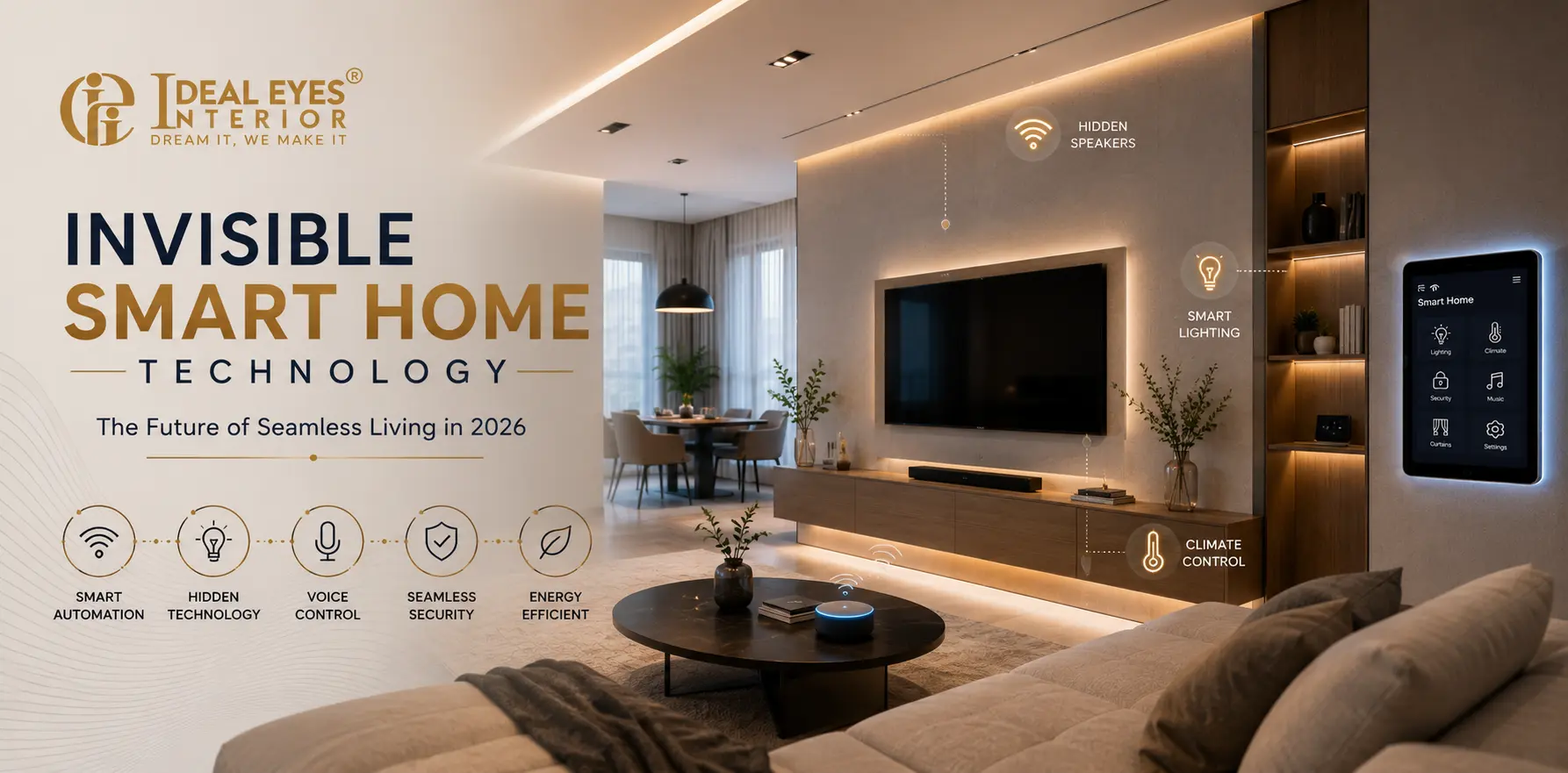
Technology is transforming modern homes faster than ever. However, homeowners today are no longer interested in filling their living spaces with visible gadgets, wires, and bulky devices. Instead, the focus is shifting toward Invisible Smart Home Technology—a design approach where technology works quietly in the background while maintaining a clean, elegant, and clutter-free interior.
In 2026, this trend is becoming a major part of luxury homes, modern apartments, and premium interior design projects. Invisible technology combines convenience, automation, and aesthetics to create smarter living environments without compromising visual appeal.
What Is Invisible Smart Home Technology?
Invisible Smart Home Technology refers to smart devices and automation systems that are integrated into a home in a way that they remain hidden from view while still delivering advanced functionality.
Unlike traditional smart gadgets that are clearly visible, invisible smart systems blend seamlessly into walls, ceilings, furniture, and architectural elements. The goal is to make technology feel natural and effortless rather than noticeable.
Examples include:
- Hidden smart speakers integrated into walls
- Motion sensors concealed within ceilings
- Smart lighting systems with invisible controls
- Wireless charging surfaces built into furniture
- Voice-controlled automation without visible devices
- Motorized storage solutions hidden inside cabinetry
This approach creates a cleaner, more sophisticated interior while enhancing everyday convenience.
Why Invisible Technology Is Becoming Popular in 2026
Modern homeowners want spaces that feel calm, organized, and visually appealing. Visible gadgets can often create clutter and disrupt the overall design aesthetic.
Invisible smart technology solves this challenge by combining innovation with minimalist design principles.
Some key reasons behind its growing popularity include:
- Enhanced Aesthetics
Hidden technology allows homeowners to maintain a premium and elegant interior design without sacrificing functionality.
- Better Space Utilization
Integrated smart systems reduce the need for standalone devices, helping maximize usable space in apartments and smaller homes.
- Improved User Experience
Automation works seamlessly in the background, making daily activities easier and more efficient.
- Future-Ready Homes
Homes equipped with integrated smart technology are often viewed as more modern and valuable in the real estate market.
Top Invisible Smart Home Technology Trends for 2026
- Hidden Smart Lighting Systems
Smart lighting is becoming increasingly sophisticated. In 2026, many homeowners are choosing lighting systems that are fully integrated into ceilings, walls, and architectural features.
These systems can automatically adjust brightness, color temperature, and ambiance based on occupancy, time of day, or user preferences.
- Invisible Voice Assistants
Voice-controlled technology is evolving beyond visible smart speakers. Many new systems integrate microphones and speakers directly into walls, ceilings, and furniture, creating a seamless experience without exposed hardware.
- Smart Glass Technology
Smart glass can switch between transparent and opaque modes with a simple command. This technology offers privacy, energy efficiency, and a futuristic appearance, making it popular for modern homes and luxury interiors.
- Hidden Climate Control Systems
Advanced climate systems now use concealed sensors and automated controls to regulate temperature and air quality without visible equipment disrupting the design.
- Wireless Charging Furniture
Tables, countertops, and bedside units are increasingly being designed with built-in wireless charging capabilities. Users simply place their devices on the surface without needing visible cables or charging stations.
How Interior Design Benefits from Invisible Technology
The integration of invisible technology is changing the way designers approach modern living spaces.
For interior designers, it offers the ability to create homes that are both functional and visually refined. Technology becomes part of the architecture rather than an afterthought.
Benefits include:
- Cleaner and more minimalist interiors
- Better furniture placement flexibility
- Reduced cable clutter
- Improved property value
- Enhanced user comfort
At Ideal Eyes Interior, we believe the future of home design lies in creating spaces where technology supports daily life without overwhelming the visual experience.
Things to Consider Before Installing Invisible Smart Systems
Before investing in smart home automation, homeowners should evaluate:
- Compatibility with existing infrastructure
- Long-term maintenance requirements
- Scalability for future upgrades
- Professional installation needs
- Security and privacy considerations
Choosing trusted technology providers and experienced interior design professionals can help ensure a smooth and successful implementation.
The Future of Invisible Smart Homes
As technology continues to evolve, the distinction between design and automation will become increasingly blurred. Future homes will feature intelligent systems that operate naturally in the background, responding to user preferences without requiring constant interaction.
Invisible Smart Home Technology represents the next stage of modern living—where convenience, efficiency, and aesthetics work together seamlessly.
For homeowners looking to create future-ready interiors in 2026, integrating hidden smart solutions can provide both practical benefits and timeless design appeal.
Conclusion
Invisible Smart Home Technology is no longer a futuristic concept. It is becoming a defining feature of modern interior design in 2026. From hidden lighting and integrated voice assistants to smart glass and wireless charging furniture, these innovations are helping homeowners create elegant, intelligent, and clutter-free spaces.
As demand for seamless living experiences continues to grow, invisible technology will play a key role in shaping the homes of the future.
1. What is Invisible Smart Home Technology?
Invisible Smart Home Technology refers to hidden automation systems and smart devices that blend into a home’s design while providing advanced functionality.
2. Is Invisible Smart Home Technology expensive?
The cost varies depending on the level of automation and integration, but prices are becoming more affordable as technology advances.
3. Can invisible smart systems be added to existing homes?
Yes. Many smart solutions can be retrofitted into existing homes, although some installations may require professional modifications.
4. What are the biggest benefits of invisible smart technology?
Cleaner interiors, improved convenience, enhanced aesthetics, better space utilization, and increased property value.
5. Is Invisible Smart Home Technology suitable for small apartments?
Yes. Hidden smart systems are especially beneficial for smaller spaces because they reduce clutter and maximize usable living areas.